
Pennsylvania Police Records Search
Pennsylvania police records are public documents in most cases. The state gives residents the right to view arrest records, incident reports, and criminal history through several official channels. Pennsylvania law presumes all government records are public unless a specific exemption applies. You can request records from the Pennsylvania State Police, local departments, and county agencies. This guide covers the main ways to find and access police records across Pennsylvania, including online tools, right-to-know requests, and official portals operated by state agencies.
Pennsylvania Police Records Quick Facts
Pennsylvania State Police and Access to Police Records
The Pennsylvania State Police (PSP) is the central authority for many types of police records in the state. PSP serves all 67 counties and keeps records for incidents it investigates directly. Local departments handle their own police records, but PSP acts as a hub for statewide criminal history data. The agency was formed in 1905 and is among the oldest state police forces in the country.
The PSP main website is the starting point for most record requests. You can find links to crash reports, criminal history checks, public information releases, and right-to-know submissions all from one place. PSP can be reached by phone at 717-783-5599 for general inquiries. The records division is based at 1800 Elmerton Avenue in Harrisburg. Staff there handle everything from PATCH background checks to formal right-to-know requests filed under 65 P.S. §§ 67.101-67.3104.
The PSP main website at pa.gov/agencies/psp serves as the gateway for most police records needs in the state. It links to every major records tool PSP operates, including crash reports, background checks, and public information release reports.
The Pennsylvania State Police main website provides access to all records programs and public safety services.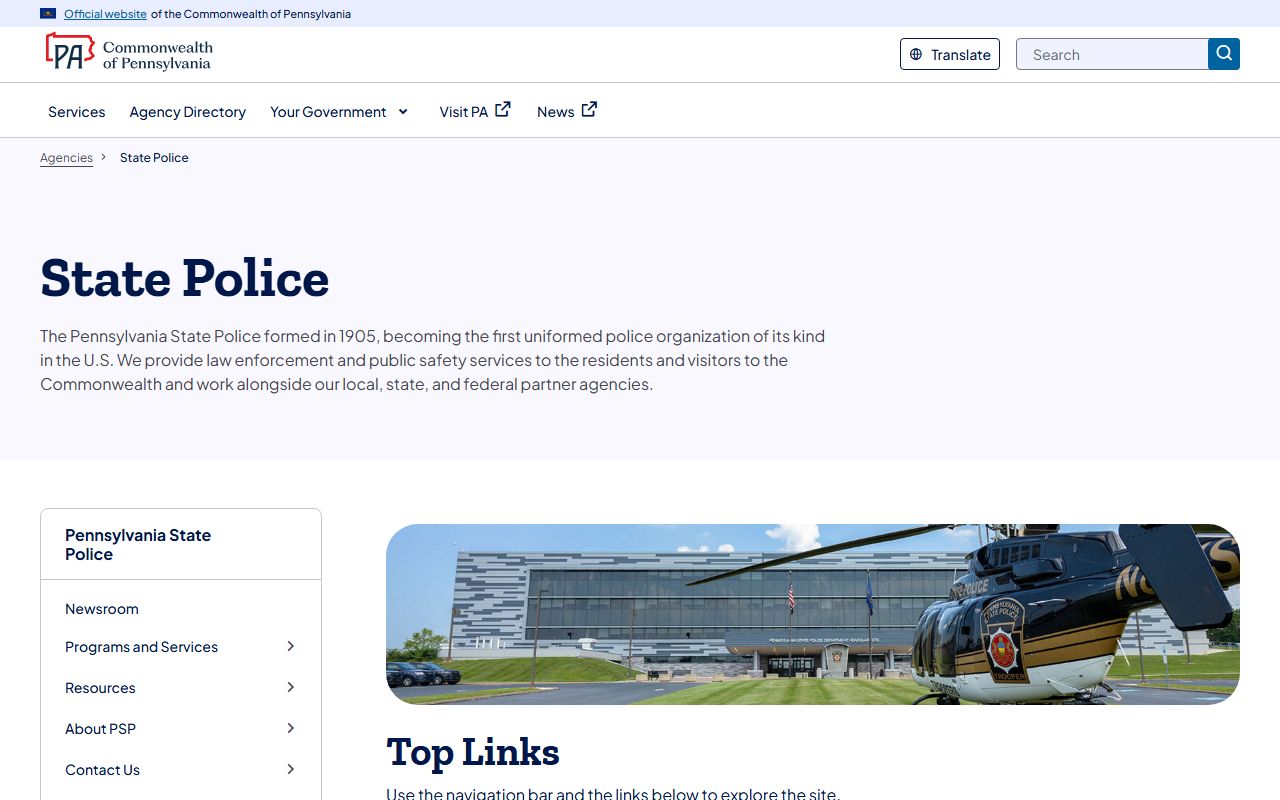
From this page, users can reach crash report requests, right-to-know portals, PATCH criminal history checks, and public information release reports. All major police records tools are accessible from one hub.
Pennsylvania Right-to-Know Requests for Police Records
Pennsylvania's Right-to-Know Law, codified at 65 P.S. §§ 67.101-67.3104, was enacted in 2008 and took effect in 2009. It is one of the strongest open records laws in the country. Under this law, all government records are presumed public. An agency must prove a record falls under a valid exemption to deny access. This shifts the burden from the requester to the agency, making it easier to obtain police records and other public safety documents.
To request PSP police records under the Right-to-Know Law, you submit your request to the PSP Right-to-Know Officer, William Rozier. Requests can be sent by mail to 1800 Elmerton Avenue, Harrisburg, PA 17110. You may also fax requests to 717-525-5795. In-person submissions are accepted Monday through Friday, 8:15 a.m. to 4:15 p.m. Once a complete request is received, the agency has five business days to respond. Agencies may extend this deadline by up to 30 days with written notice explaining the reason for the delay.
Fees for copied records are $0.25 per page. Certification costs $2 per document. If the total estimated cost exceeds $100, prepayment is required before work begins. Fees under $5 are typically waived. These fee rules apply to PSP records. Local agencies may have different fee schedules for their police records.
The PSP Right-to-Know submission portal walks users through the request process step by step. Submitting online at pa.gov/services/psp/submit-a-pennsylvania-state-police-right-to-know-request creates a time-stamped record of your submission, which is helpful for tracking the five-day response window.
The PSP Right-to-Know request portal allows online submission of police records requests directly to the Pennsylvania State Police.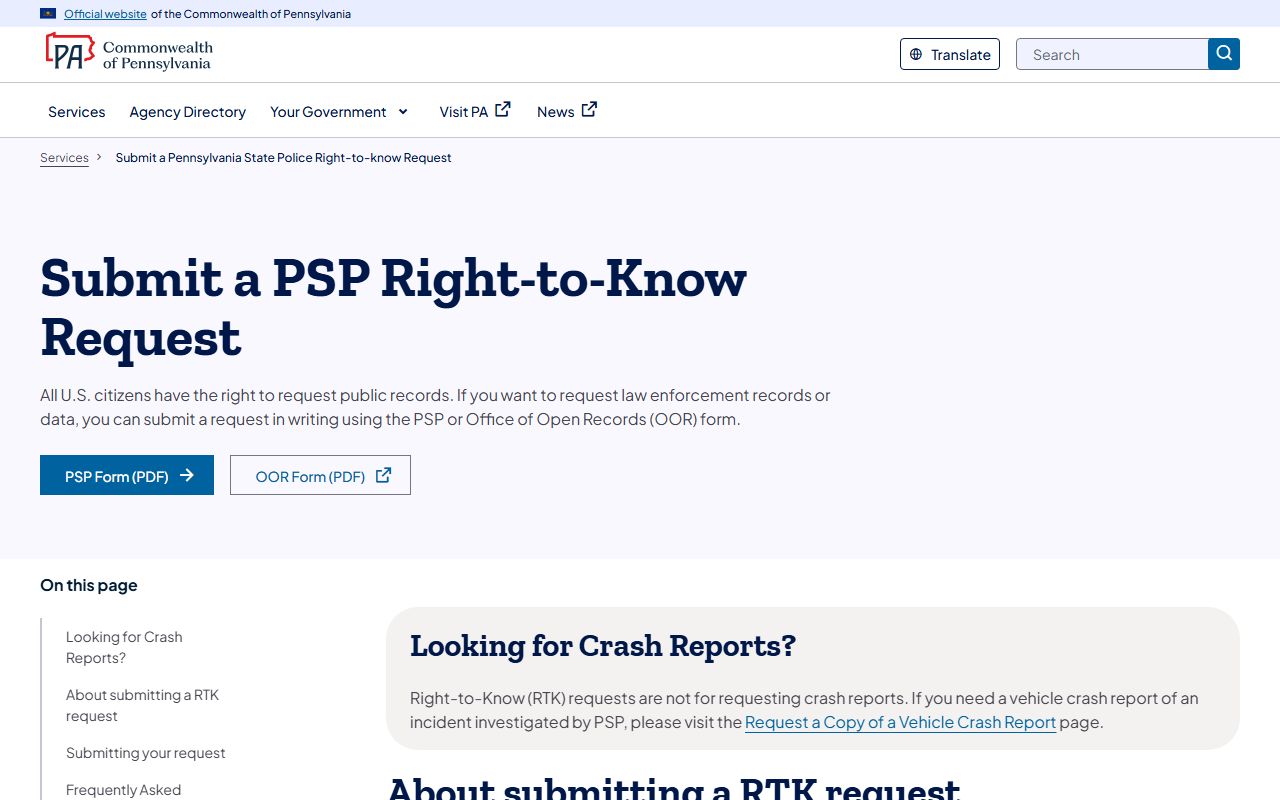
Using the online form speeds up processing and removes the risk of delays from mailed submissions. It is the recommended method for most right-to-know requests for Pennsylvania police records.
PSP publishes full contact details for their records office. The contact page at pa.gov/agencies/psp/contact-psp lists phone numbers, addresses, and staff contacts for various record types. PATCH criminal history help is available at 1-888-QUERY-PA (1-888-783-7972). Crash report inquiries go to a separate line at 717-783-3380.
The PSP contact information page lists all phone numbers and mailing addresses for Pennsylvania police records requests and inquiries.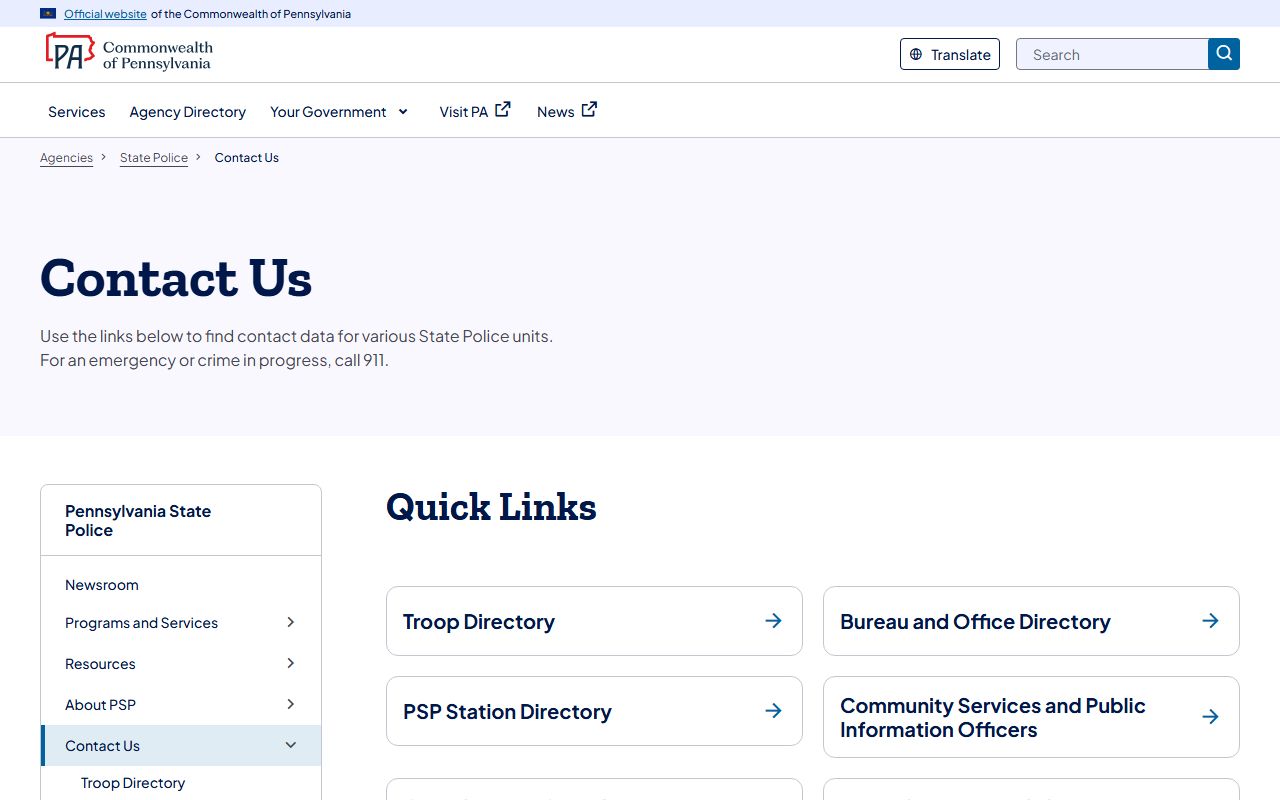
Using the right contact saves time. Different staff handle crash reports, PATCH checks, and general right-to-know requests for police records.
The main records request portal gives an overview of every record type PSP handles. The page at pa.gov/agencies/psp/programs/records-request explains the correct process for requesting each type of police record or public safety document.
The PSP records request portal outlines all available Pennsylvania police record types and the correct method for obtaining each one.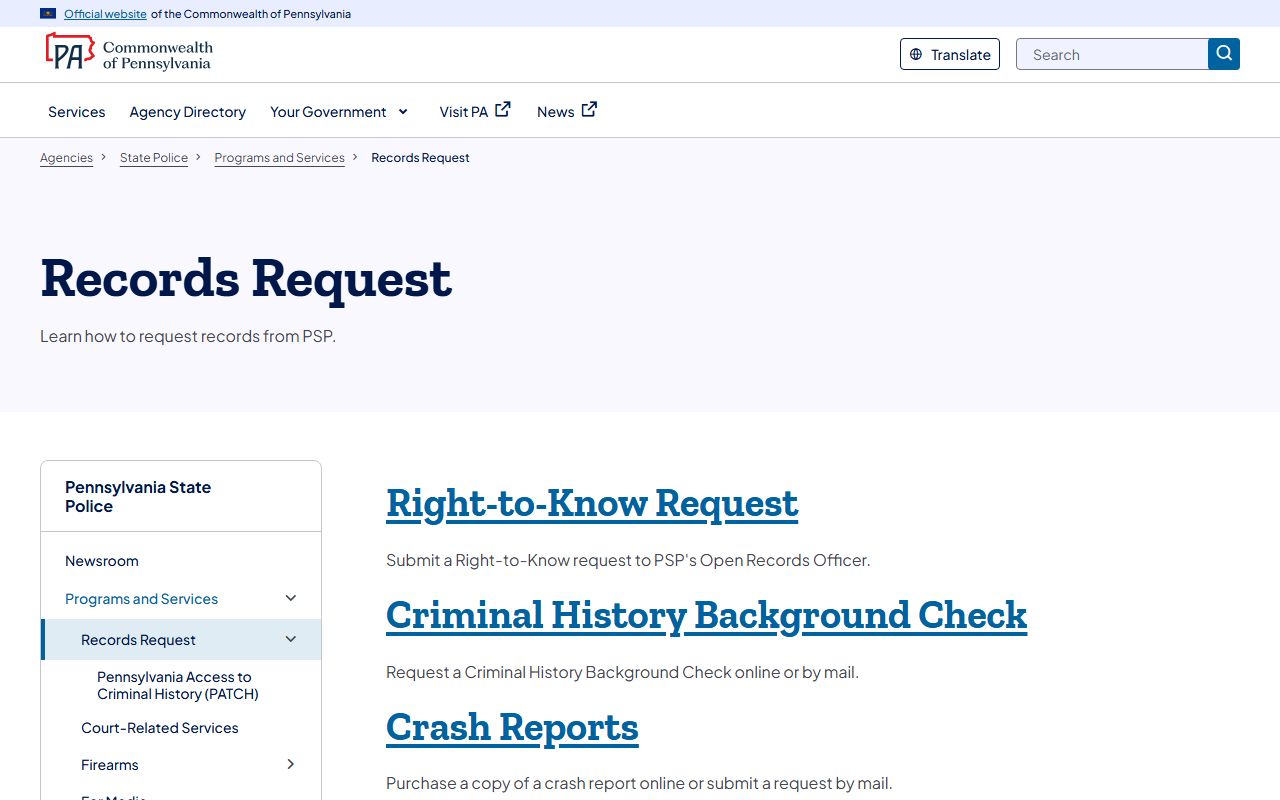
This portal is the best starting point for anyone who is not sure which type of record they need. It covers everything from incident reports to certified criminal history documents.
Note: Right-to-know requests for local department police records must go directly to each local agency, not to PSP.
Pennsylvania PATCH Criminal History Records
PATCH stands for Pennsylvania Access to Criminal History. It is the state's official system for running criminal history background checks. PATCH is operated by the Pennsylvania State Police under the authority of Act 34 of 1985 and Act 114 of 2006. It draws on the statewide repository of criminal history record information governed by 18 Pa.C.S. §§ 9101-9183, the Criminal History Record Information Act (CHRIA).
A standard PATCH check costs $22. Volunteers working with qualifying organizations may receive the check at no cost. When the system finds no record, approximately 85% of results are returned instantly online. Requests that need manual review are typically completed within two weeks. This review process applies when a name match requires additional confirmation before a result can be issued with confidence. The PATCH system processes a high volume of requests each year from individuals and organizations across Pennsylvania.
PATCH results show whether a person has a criminal record in Pennsylvania. CHRIA governs who may access which data and under what conditions. The law limits access to certain categories of information and protects individuals from improper use of their criminal history records. These protections apply regardless of who submits the check.
The PATCH overview page walks users through the submission process and explains fee structures. It can be found at pa.gov/agencies/psp/programs/records-request/overview-of-patch.
The PATCH overview page from the Pennsylvania State Police explains the criminal history background check system and the request process.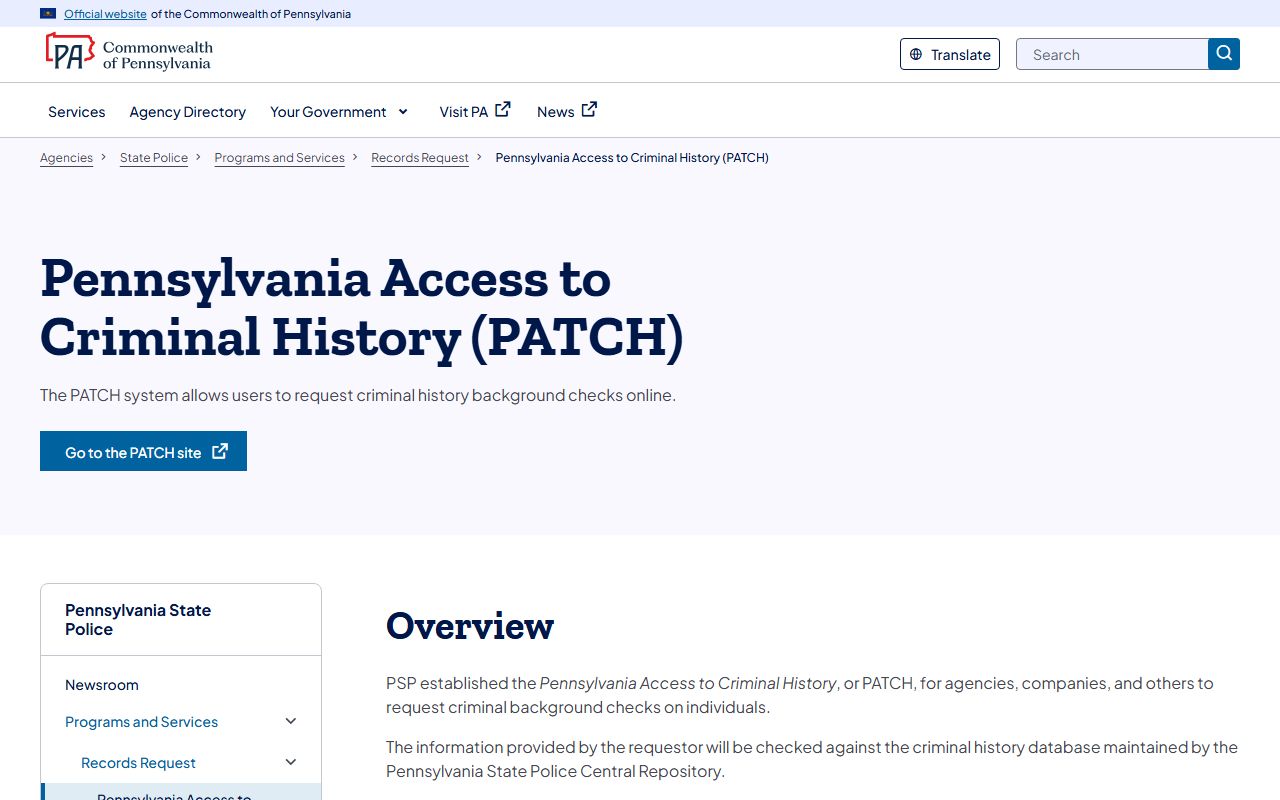
PATCH is one of the most widely used police records tools in Pennsylvania. Schools, nonprofits, and individuals rely on it to access certified criminal history data through official state channels.
The Pennsylvania Department of Education also references PATCH for clearance requirements for those working with minors. More details are available at pa.gov/agencies/education/programs-and-services/educators/clearances/pennsylvania-access-to-criminal-history-patch.
The Pennsylvania Department of Education PATCH clearance page explains how educators access criminal history records for required state clearances.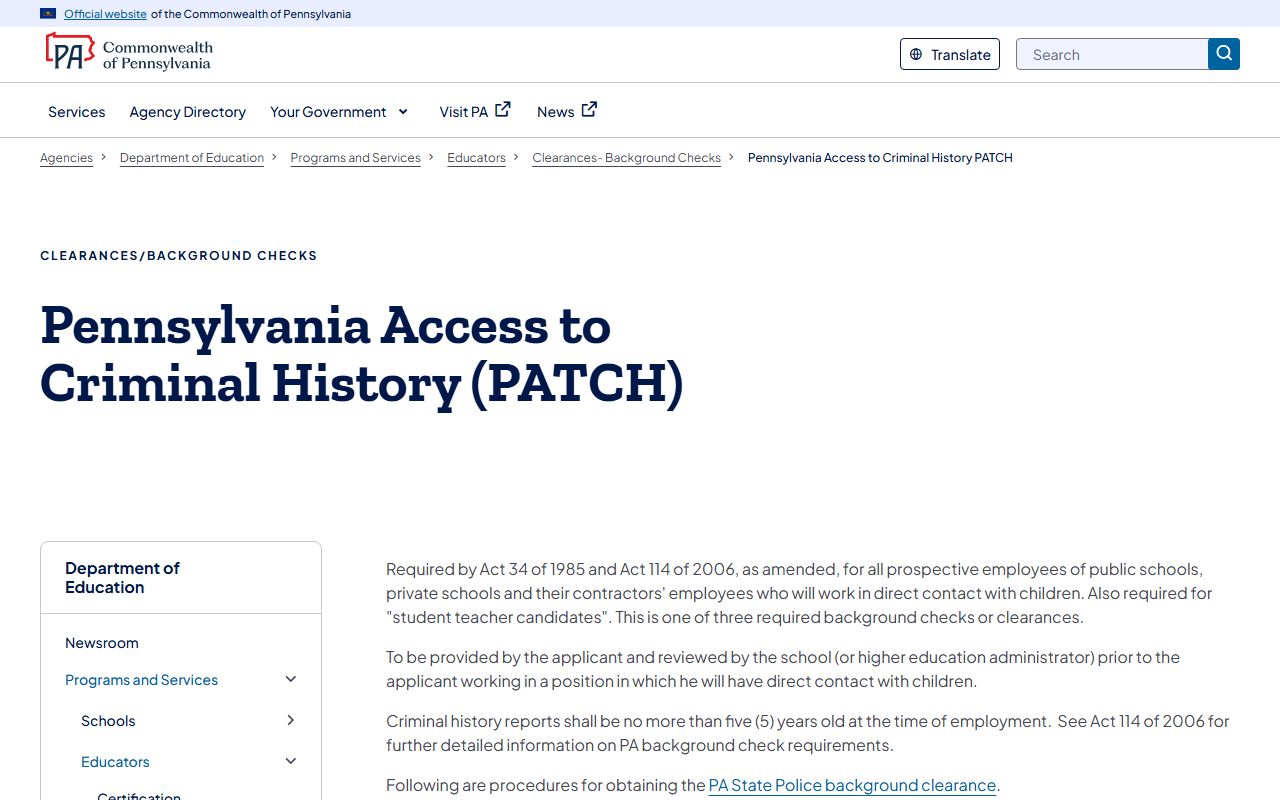
The education department uses PATCH as part of mandatory clearance rules for people working in schools and youth programs across Pennsylvania.
Pennsylvania DHS Criminal Background Checks
The Pennsylvania Department of Human Services (DHS) maintains a criminal background check portal tied to the PATCH system. It is used in situations where individuals work or volunteer with children. The check costs $22 for paid workers and is free for volunteers. DHS background checks draw on the same criminal history data as PATCH but are accessed through a separate DHS interface.
Results reflect Pennsylvania arrest records and conviction data from the statewide criminal history repository. This portal is part of the state's effort to protect vulnerable populations through accurate police records access and careful criminal history review.
The DHS criminal background check portal is at pa.gov/agencies/dhs/resources/keep-kids-safe/child-abuse-clearances/criminal-background-check.
The Pennsylvania DHS criminal background check portal provides access to criminal history records for child safety clearance purposes.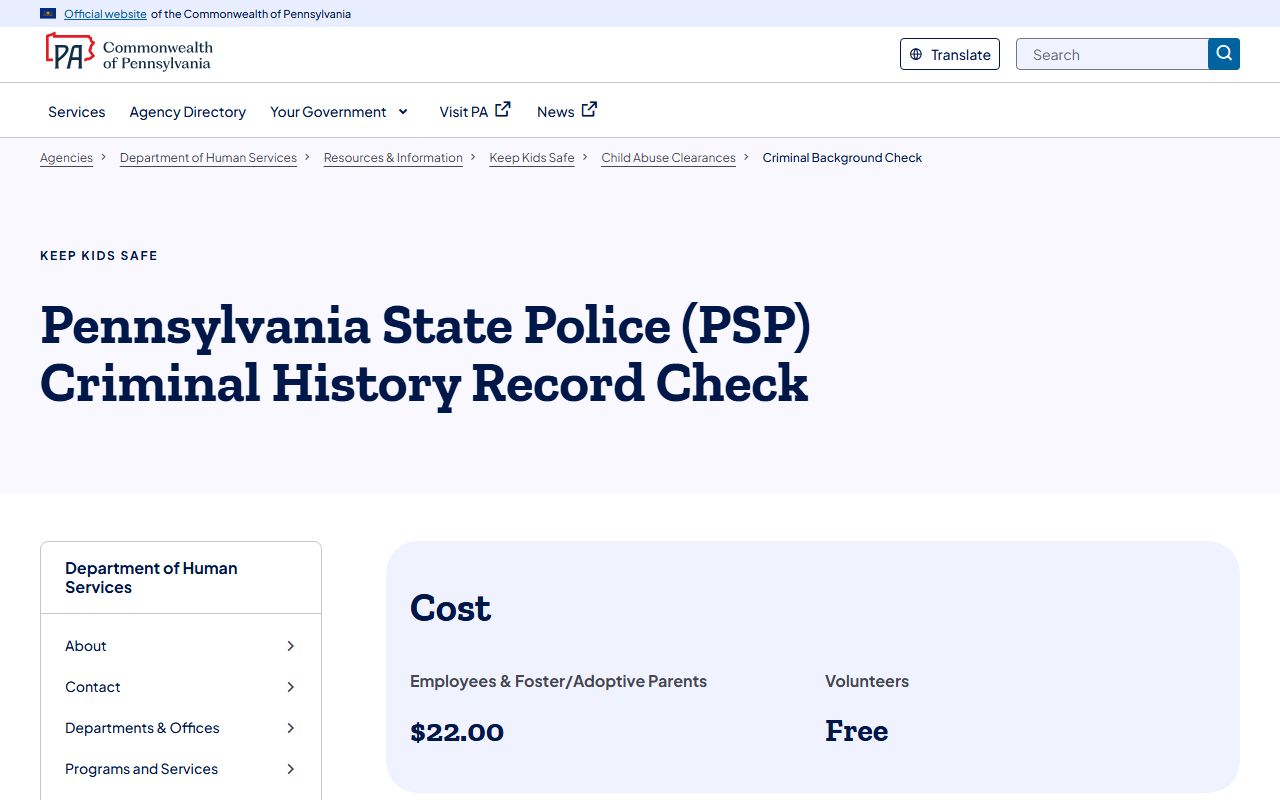
This portal handles both online and paper-based submissions and returns results through secure channels to protect the privacy of those being checked.
Note: DHS background checks are tied to specific program requirements and are not general-purpose criminal history lookups open to the public.
Pennsylvania Crash Reports and Vehicle Incident Records
Vehicle crash reports are among the most requested police records in Pennsylvania. PSP handles crash reports for incidents that occur on state roads outside local police jurisdiction. These reports document the parties involved, road conditions, injuries, and the events leading up to the crash. Each crash report copy costs $22 and can be ordered through a dedicated line at 717-783-3380. PSP also offers an online crash report request system.
The crash report request page at pa.gov/services/psp/request-a-copy-of-a-vehicle-crash-report lists all submission methods and the information needed to locate a specific report. You will need the date, location, and names of the parties involved to complete the request form.
The PSP crash report request page explains how to obtain copies of Pennsylvania vehicle crash reports online or by mail.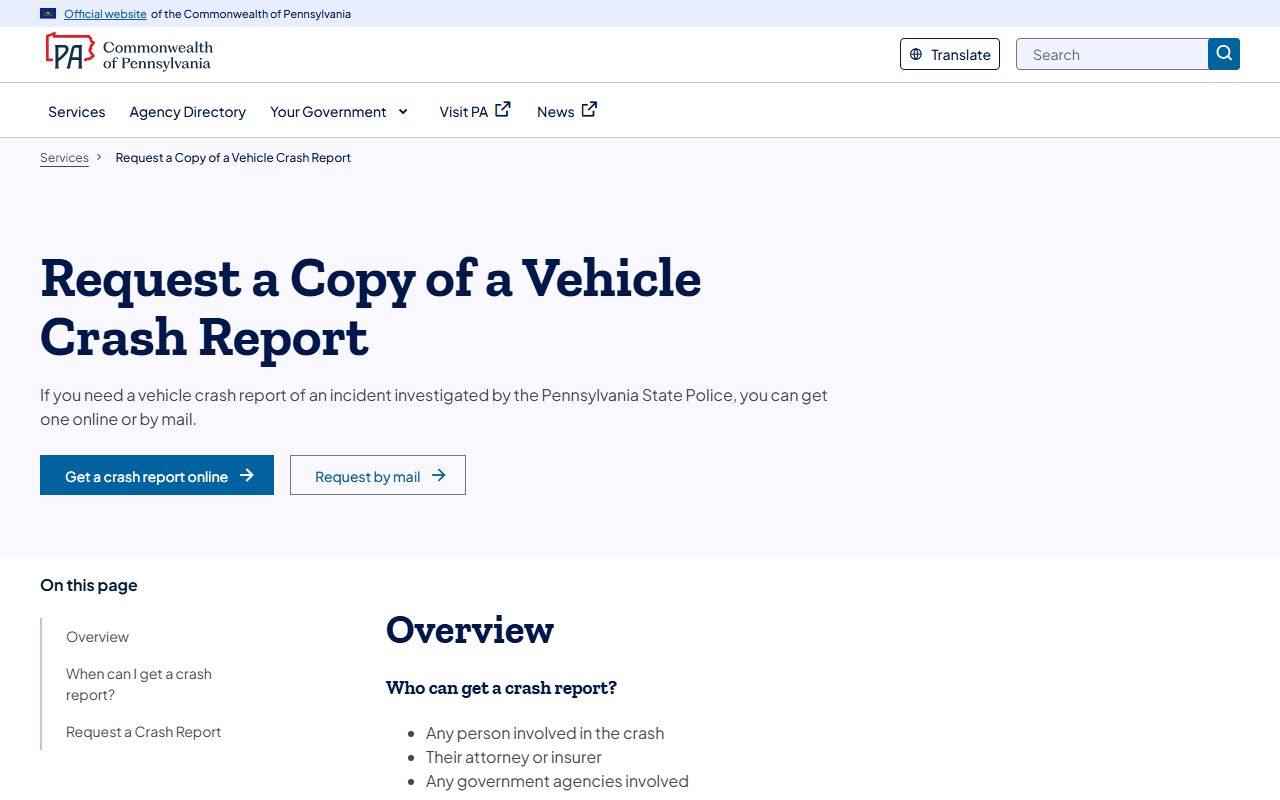
Local crash reports involving a municipal police department must be requested directly from that department. PSP only holds crash reports for incidents investigated by its troopers.
Public Information Release Reports from Pennsylvania State Police
Public Information Release Reports, known as PIRRs, are a unique type of police record published directly by PSP. Each PSP station posts PIRRs on a regular basis. These reports cover incidents handled by that station and serve as a public log of police activity. PIRRs include information about arrests, calls for service, and notable incidents in the patrol area. They are available for all PSP stations and some special units across Pennsylvania.
PIRRs remain on the PSP website for 30 days after publication. After that window, they are removed from the public portal. Subscribers can sign up to receive PIRRs by email as soon as they are published. This is a useful tool for residents who want current public safety reports from their area without filing a formal records request. An interactive map on the PSP website helps users identify which station covers their location.
The PIRR page at pa.gov/agencies/psp/resources/public-information-release-reports lists current and recent reports from all PSP stations and select special units.
The PSP Public Information Release Reports page posts regular incident summaries from all Pennsylvania State Police stations as public safety reports.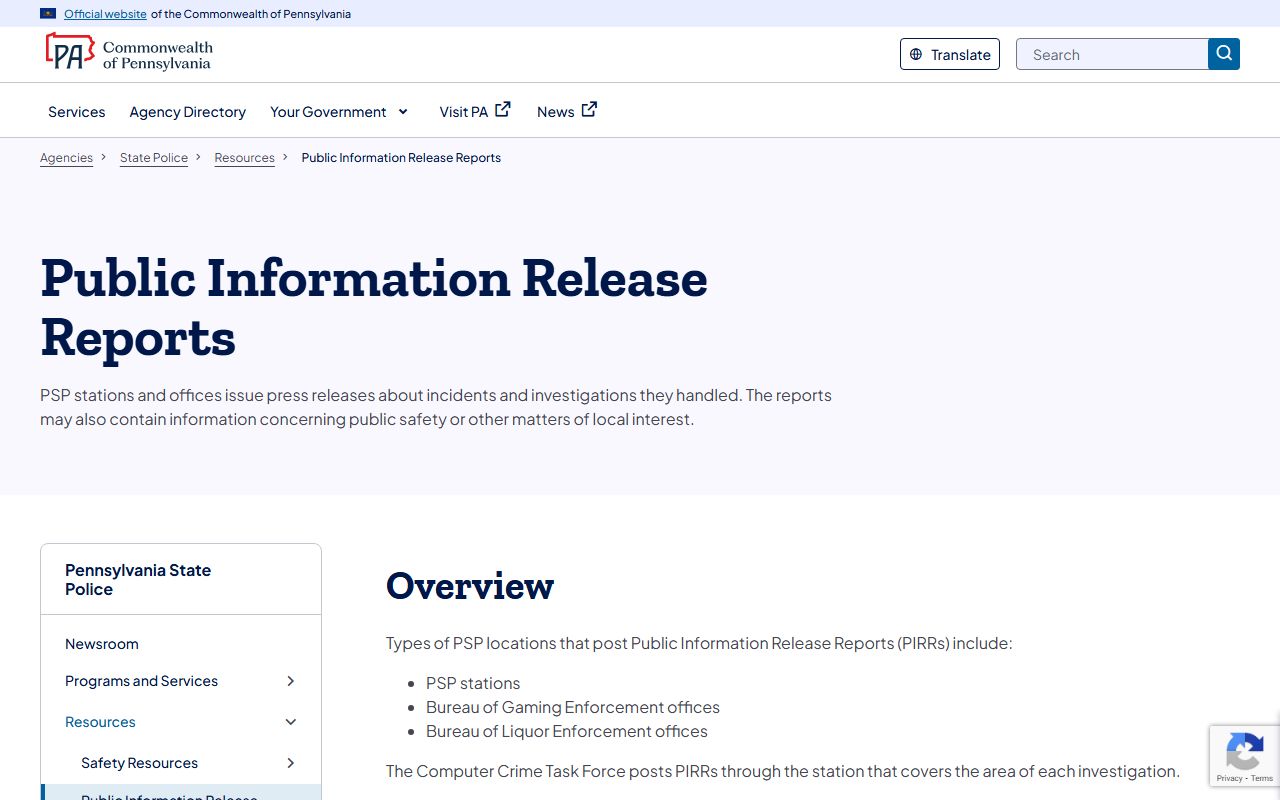
PIRRs offer a fast way to review recent police activity in any PSP patrol zone without filing a formal right-to-know request under 65 P.S. §§ 67.101-67.3104.
PSP also publishes its regulations and operational manuals for public review. These documents explain how the agency operates and how it handles police records. The regulations page at pa.gov/agencies/psp/resources/regulations-and-manuals is useful for understanding the rules that govern PSP record-keeping and public disclosure.
The PSP regulations and manuals page provides access to agency policies governing Pennsylvania State Police records and operations.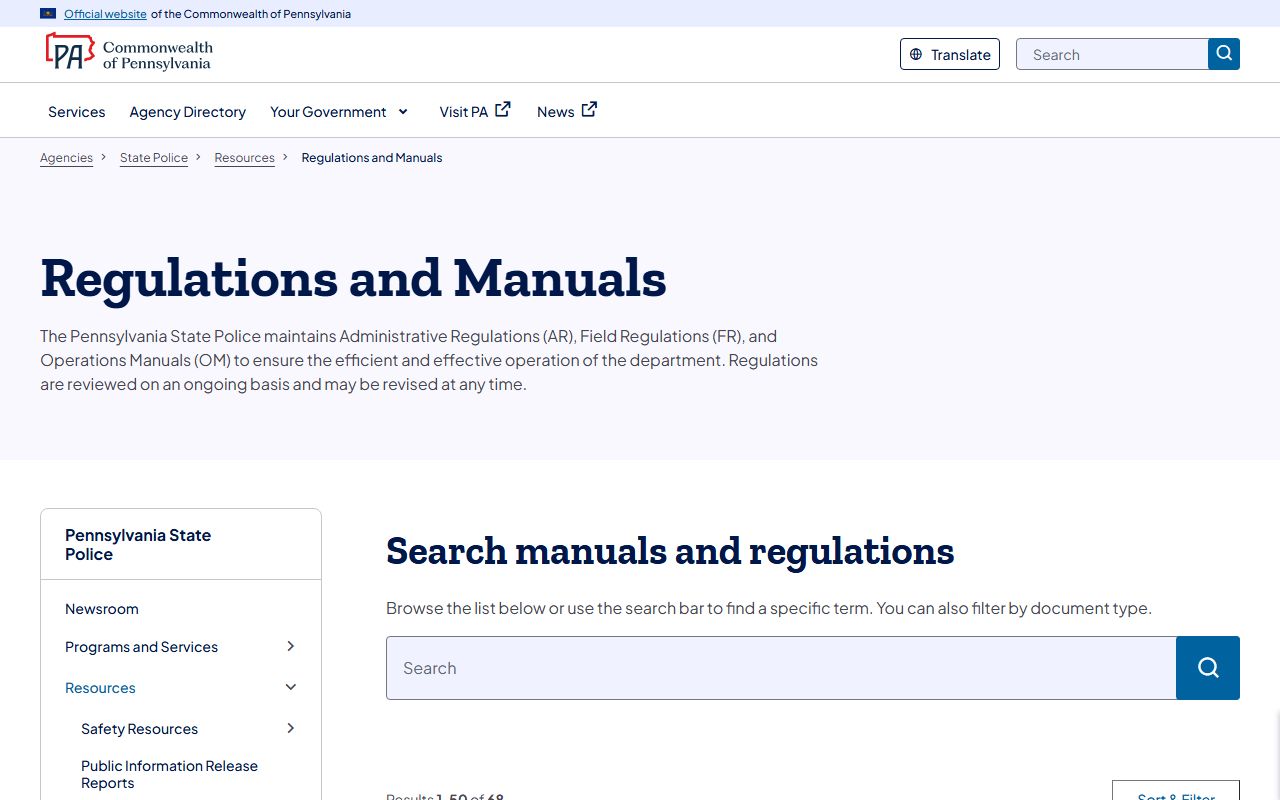
Reviewing the rules PSP follows when handling police records helps requesters know what to expect and how to frame their requests for the best outcome.
Pennsylvania Office of Open Records and Right-to-Know Appeals
The Pennsylvania Office of Open Records (OOR) is the independent body that oversees the Right-to-Know Law. If an agency denies your request for police records, you can appeal to the OOR at no cost. The OOR reviews the agency's decision and can order records to be released. This process is open to all Pennsylvania residents and businesses seeking access to public safety records.
The OOR is led by Director Liz Wagenseller. The office is located at 555 Walnut Street, Suite 605, Harrisburg, PA 17101. You can reach them by phone at 717-346-9903, by fax at 717-425-5343, or by email at openrecords@pa.gov. The OOR also provides training for agencies on how to handle right-to-know requests properly. It mediates disputes before they reach the formal appeal stage, which often resolves issues faster for both parties.
The OOR portal at openrecords.pa.gov allows anyone to file an appeal online. It also publishes past decisions and guidance documents that explain how the RTKL applies to various types of records, including police records and arrest records.
The Pennsylvania Office of Open Records portal handles Right-to-Know appeals and publishes guidance on accessing police records statewide.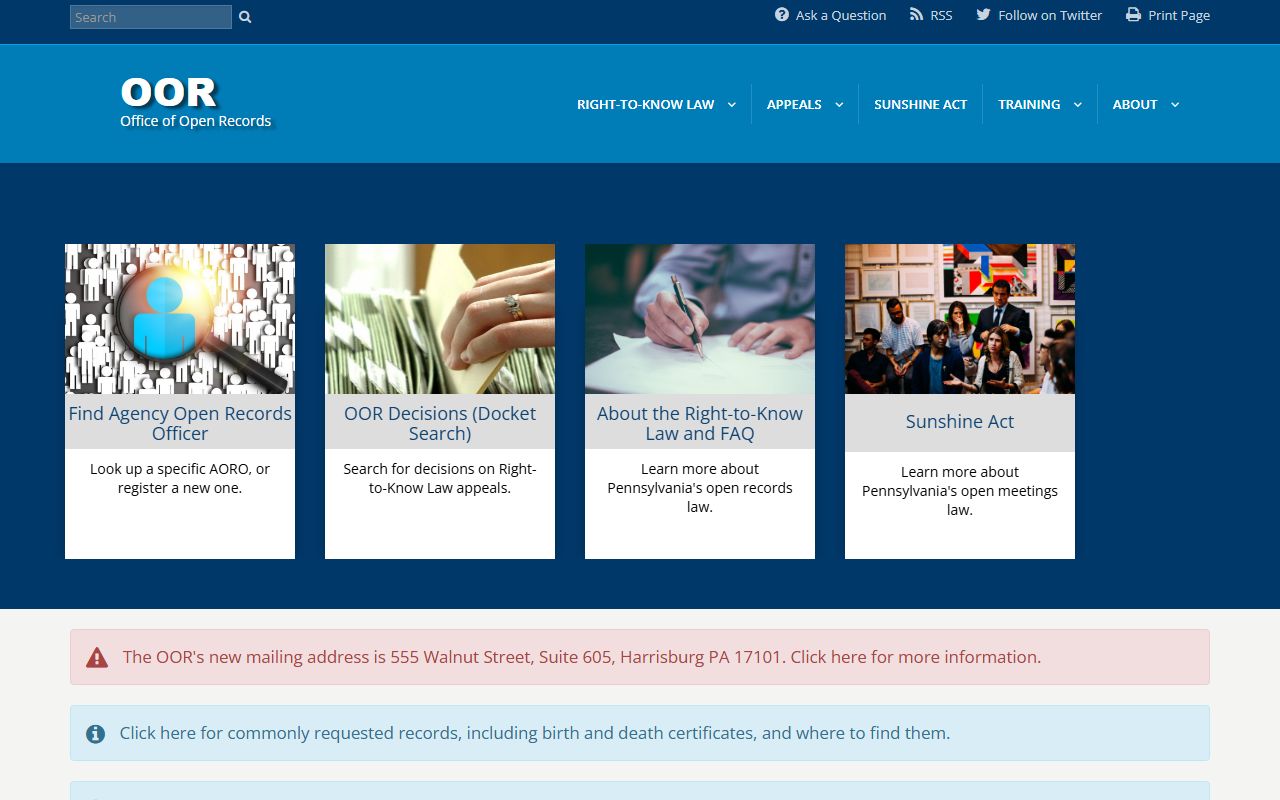
The OOR is an important safeguard for public access. It ensures agencies comply with the law and do not improperly withhold police records or other public documents from Pennsylvania residents.
Reviewing past OOR decisions can help you understand how similar police records requests have been handled and which arguments carry the most weight in an appeal.
The OOR portal also offers published decisions and training materials for requesters navigating Pennsylvania's open records process.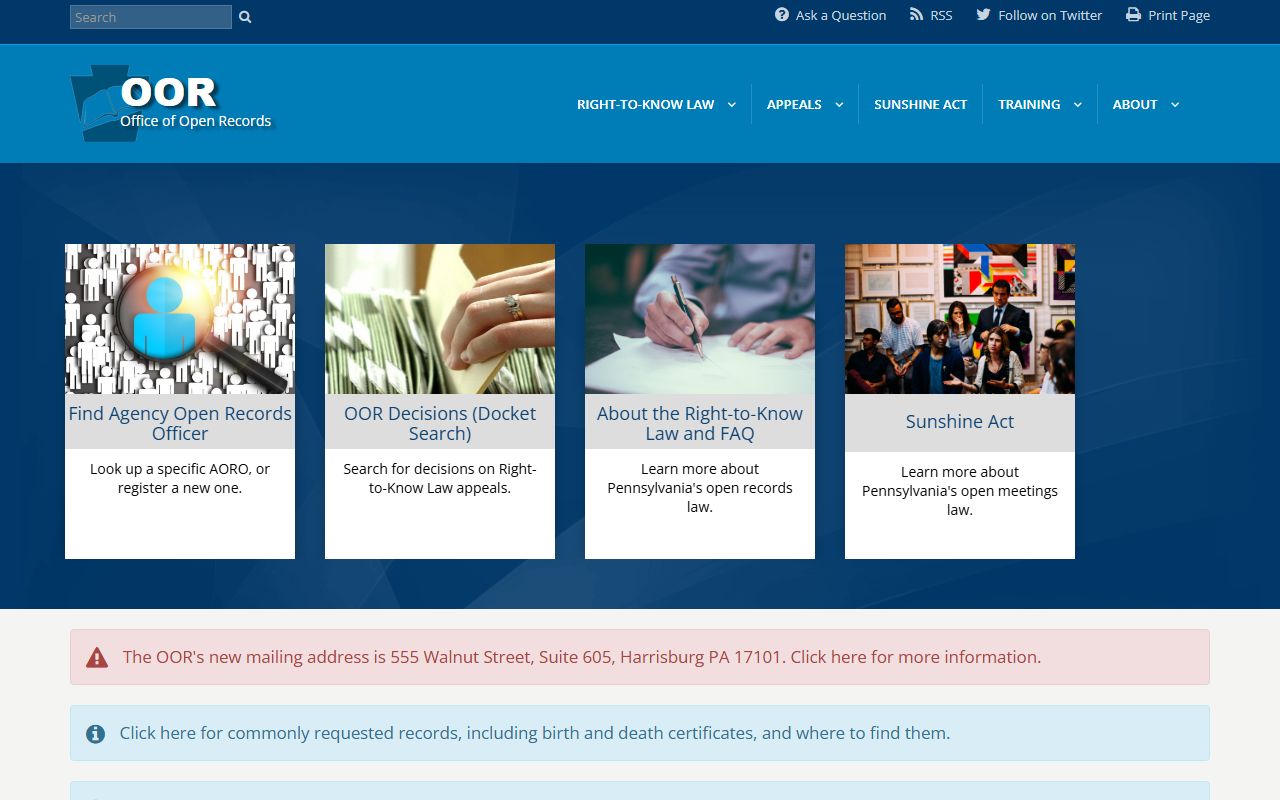
Past decisions are searchable on the OOR site. They cover a wide range of agency types and record categories, including police incident reports and arrest records.
Note: The OOR does not handle appeals for records held by courts. Court records appeals follow a different process through the Pennsylvania judicial system.
Pennsylvania State Archives and Historical Police Records
For older police records, the Pennsylvania State Archives is the main resource. The Archives holds historical records under Record Group 30 (RG-30), which covers the Pennsylvania State Police going back to the early 1900s. These records include personnel files, incident logs, and administrative documents from early PSP operations. Not all records are digitized, so some research requires a physical visit.
The State Archives is managed by the Pennsylvania Historical and Museum Commission (PHMC). It is located at 1681 North Sixth Street in Harrisburg. Phone contact is 717-783-3281. Researchers can visit in person or submit requests by mail. Staff can help identify which collections hold the records you need and explain what is available for public access.
The archives page at phmc.pa.gov/State-Archives describes what records are available and how to request access to historical police records and public safety documents.
The Pennsylvania State Archives holds historical police records under Record Group 30 and accepts research requests for early Pennsylvania State Police documents.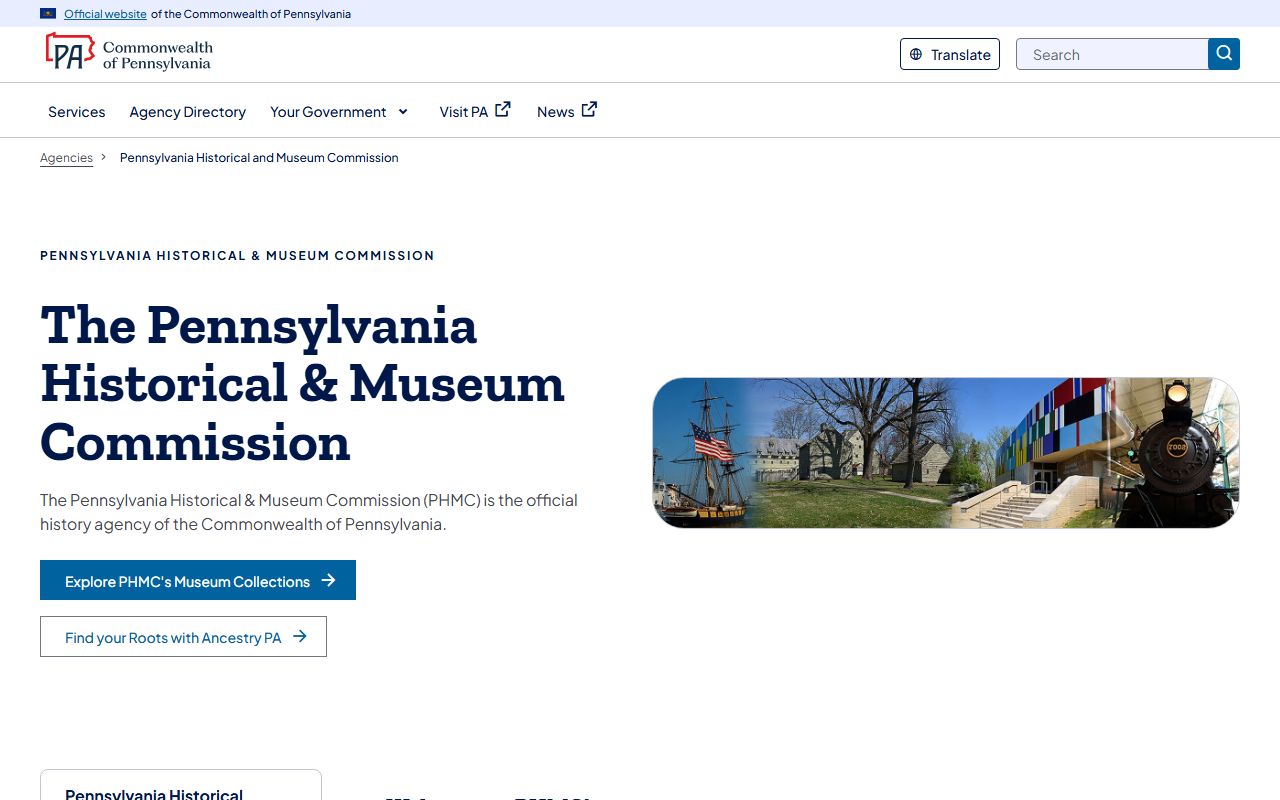
If you need police records from the early or mid-20th century, the State Archives is likely your best option. Modern online databases do not reach back that far.
Pennsylvania Uniform Crime Reporting and Public Safety Data
Pennsylvania participates in the national Uniform Crime Reporting (UCR) program. The state version is administered by the Pennsylvania Attorney General's office. More than 1,000 local law enforcement agencies submit data on Part I and Part II offenses, arrests, clearances, and victimization each year. This data is compiled and published as annual public safety reports covering crime trends across the state.
UCR data gives a broad picture of criminal activity in Pennsylvania. Researchers, journalists, and policy makers use these reports to track changes in crime rates by county and city. Each agency's data is reported separately, so you can look at crime statistics for any participating municipality. The data covers violent crimes, property offenses, and drug-related arrests. It is an aggregate source and does not identify individuals.
The Pennsylvania Uniform Crime Reporting System portal is at attorneygeneral.gov/pennsylvania-uniform-crime-reporting-system and provides access to published crime data and agency participation lists.
The Pennsylvania Uniform Crime Reporting System portal provides statewide crime statistics and arrest data from more than 1,000 participating law enforcement agencies.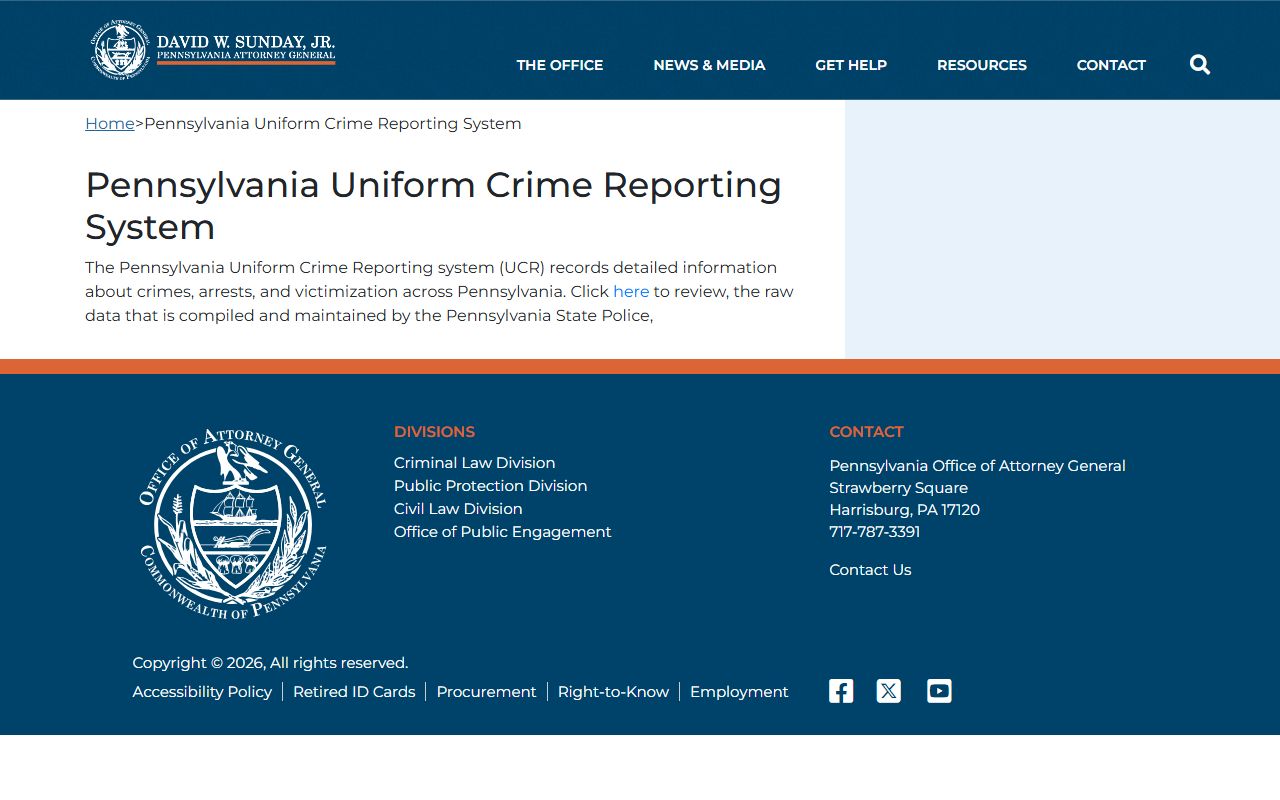
UCR data is used for statistical analysis of public safety trends rather than individual record lookups. It is best used alongside PATCH and court records for a complete picture.
Pennsylvania Court Records and the UJS Portal
Court records are closely related to police records but are kept separately by the court system. In Pennsylvania, the Unified Judicial System (UJS) portal gives free public access to all Pennsylvania court records. This includes criminal case filings, docket information, bail records, and case outcomes. Court records show what happened after an arrest, which complements the incident and arrest records held by police agencies.
The UJS portal is available at ujsportal.pacourts.us and requires no login to use. You can search cases by name, docket number, or county. Results include active and closed criminal cases across Pennsylvania. This is one of the most complete free public records tools in the state. It is especially useful when paired with a PATCH background check, since PATCH covers arrests and convictions while the UJS portal shows case-level detail.
Pennsylvania also operates a Megan's Law registry for registered sex offenders. The registry is searchable by name, city, zip code, and county at pameganslaw.state.pa.us. Together, these tools give a fuller picture of public safety records in Pennsylvania than any single source alone.
Browse Pennsylvania Police Records by County
Select a county below to find local police records, sheriff records, and incident reports for that area.
Browse Pennsylvania Police Records by City
Select a city to find police records, arrest records, and incident reports for major Pennsylvania cities.